Feature Deep Dive
Multi-platform Consistency
Consistent Web, Android, and iOS workflows across core desk-sharing operations.
Problem definition
Hybrid desk-sharing programs fail when policies are written as static documents but not enforced inside daily booking workflows. Teams quickly see recurring friction: popular zones get overbooked, policy exceptions are handled manually, and workplace managers spend time reconciling attendance expectations with real desk demand. Over time, this creates trust issues for employees and weakens confidence in rollout quality for leadership. The operational challenge is not only booking desks; it is enforcing fair, predictable access rules at scale while maintaining a reliable trail of what happened, where, and when. Multi-platform Consistency addresses this gap by connecting planning intent to actual desk behavior.
DeskHybrid solution
DeskHybrid turns policy and booking logic into operational controls that are applied consistently across booking, check-in, and release flows. Instead of relying on policy reminders, teams configure clear rules and let the product enforce them in real time. The result is less manual intervention, better data quality, and faster decisions for office and operations teams. This feature is designed to work with measurable outcomes: fewer booking conflicts, fewer ghost reservations, and higher confidence in usage reports. Because the module is part of the same desk-sharing workflow as scheduling and attendance verification, teams avoid fragmented tooling and reduce handoff errors between policy owners and workplace admins.
Who this is for
This feature is especially useful for workplace operations managers, people operations leaders, facilities teams, and regional office administrators who need to run hybrid attendance rules without increasing support overhead. IT and security teams also benefit because the workflow is predictable and auditable, which helps during policy reviews and incident follow-up. For organizations expanding from one office to multiple locations, the value is consistency: local teams can operate with clear constraints while still following a shared global model. If your rollout has high booking volume, complex attendance patterns, or recurring no-show and fairness issues, this capability usually provides immediate operational clarity.
Operational Highlights
- Keep Web, Android, and iOS flows operationally aligned.
- Reduce training and support friction across all user roles.
- Support rollout speed with consistent feature behavior.
This capability is part of DeskHybrid desk-sharing specialist workflow and is designed for practical booking accuracy, not speculative claims.
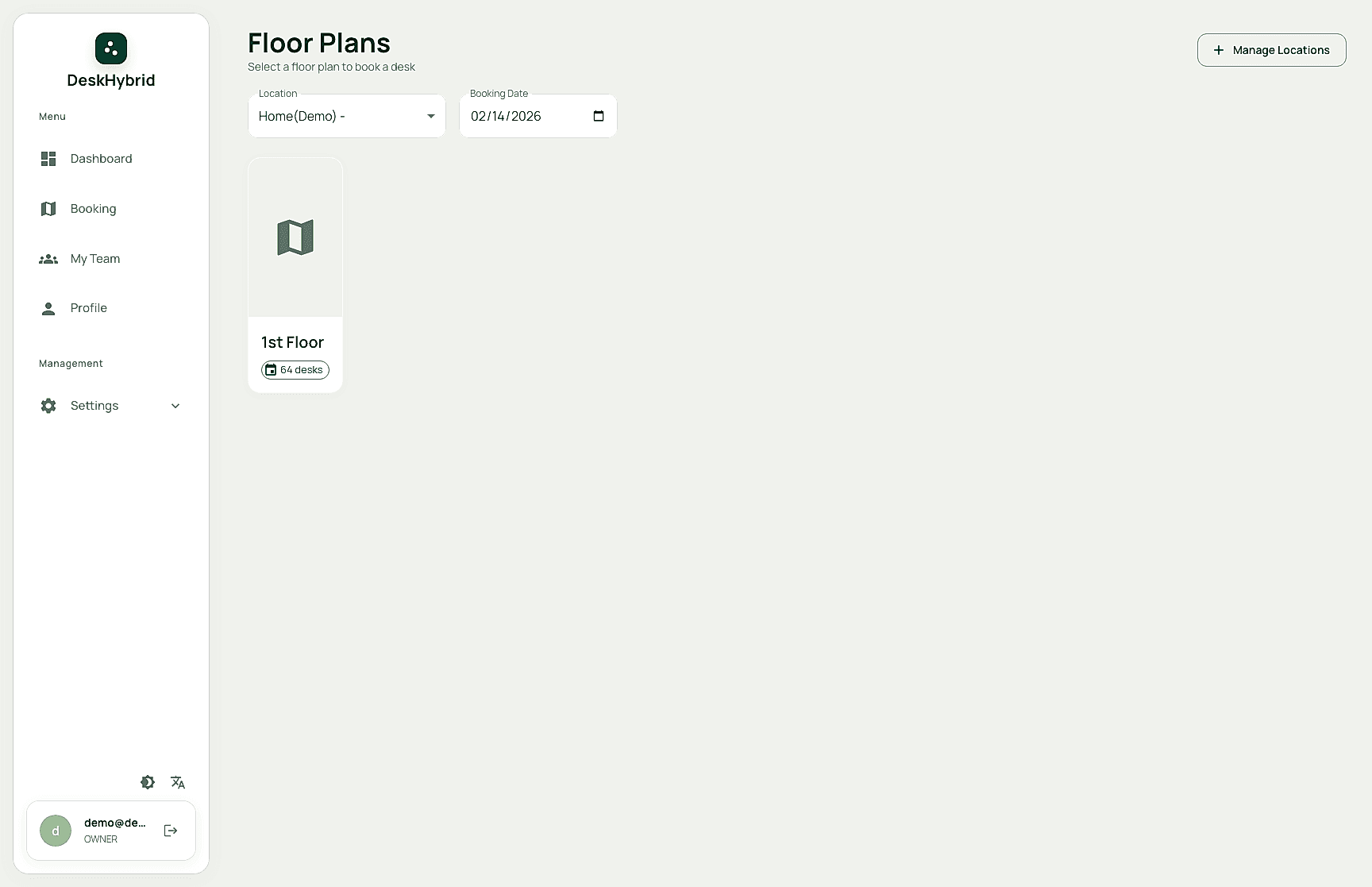
See this feature in action in your trial workspace.
Why DeskHybrid
Many products provide generic desk booking, but DeskHybrid is structured around specialist modules that focus on policy accuracy, verified presence, and utilization quality. This approach lets teams adopt the exact controls they need without rebuilding core processes. In practice, organizations choose DeskHybrid when they need transparent logic, operational traceability, and rollout confidence across web and mobile environments. The product keeps decision-making grounded in measurable behavior rather than assumptions, which matters when hybrid policies change and teams must adapt quickly. As a result, workplace owners can improve employee trust while preserving governance standards.
Mini use-case
A regional HQ with multiple teams runs two mandatory onsite days and a rotating project schedule. Before adopting DeskHybrid, teams booked early, no-shows were hard to recover, and managers manually reassigned desks. After rollout, the workplace team configured policy logic and check-in expectations once, then enforced them through the booking flow. In the first month, conflict tickets dropped, idle reservations were reduced, and admins spent less time resolving edge cases. The same setup was then copied to a second office with minimal configuration changes, giving leadership a repeatable model rather than one-off fixes.
Rollout and governance
Start with one location, align policy rules with workplace owners, then scale across teams with a shared governance model for verified presence and fair desk allocation.
Continue with Digital Floor Editor for adjacent workflow coverage, and review Desk Reservation System for shared terminology used by rollout stakeholders.